
 A Physics Model
The Simple Model
The Simple Universe
A Physics Model
The Simple Model
The Simple Universe
• jump to the keyboard actions
 Site Map
Please bear in mind that later discussions may use details from earlier discussions
Discussions
Home page
A physics model from first principles that is based on a mechanism for gravity
Notes
Simple concepts
A physics model from scratch, The elementary particle, The four base subatomic particles, Protons and neutrons, Electric charge and electric fields, Matter particle size, Electric interactions with matter particles, Mass, inertia and momentum, Multiple body systems
Rationale
Solutions found by a random process
Random processes, Modelling the atom, Modern physics model
Overview
A simple approach
Approach, Goal, Method, A mechanical model, Proofs and disproofs
Atom walk through
A simple atom
Building the base subatomic particles, The model's subatomic particles, Electric charge, Electric field particles, Attraction and repulsion, 'Neutral' particle electric field particles, Mechanism for mass, A simple atom
Detailed Discussions
How the model works
As simple as possible, but not any simpler
Start of the model, Electric charge and electric field particles, Matter particle size, Electric charge attraction and repulsion, Light and neutrinos in an electric field, Particles and waves, Mass, inertia and momentum, Light creation and the speed of light, Universal reference frame, Special relativity discussions
Atoms
The remarkable thing about atoms, is that atoms resist being compressed
The challenge, Recap of how the model works, Mechanism for the atom, Net outcome, Atomic nuclei, Exotic atoms, Quantum tunnelling, Macro electric fields
Mass
Inertia and momentum
Mechanism for mass, Understanding E = mc2, Modern physics discussion on mass
Gravity
Chiral objects*
Mechanism for gravity, Building the subatomic particles, Matter particles in an electric field, Gravity and the matter particles, Gravity and mass and electric charge, Consequences of the model's gravity, Gravity and light, Gravity and galaxy rotation curves, Gravity and dark matter, Gravity and modern physics
Experiments
Double-slit experiment
Light and the edges of objects
Building the subatomic particles, Mechanism for diffraction, Quantum wave interference, Quantum wave collapse, Diffraction with particles, Modern physics discussion on diffraction, Question - does an electron go through both slits
Variation in the reflection of light
Light and the surfaces of objects
Building the subatomic particles, Mechanism for the variation in reflection, Modern physics discussion on the variation in reflection
Stern-Gerlach experiment
Particles and spin
Building the subatomic particles, Mechanism for quantum spin, Modern physics discussion on quantum spin
Thoughts
Words and thoughts, Mood and drama, Harmony and emotion, Soul and imagination, People and memories
Electric charge, Magnetic moments, Electric fields, Magnetic fields, Gravitational fields, Strong nuclear force, Spin, Waves, Scale, Logic
Modern Physics
Discussions
5 modern physics discussions (YouTube videos)
A new way to think about gravity, Double-slit experiment at home, Mass symmetry breaking, What is a field made of, Quantum mechanics course of 10 lectures
Questions And Answers
62 physics questions and modern physics answers
Of Interest, Classical physics, Electric charge, Electrons, Gravity, Mass, Quantum fields, Quantum mechanics, Standard Model of particles, Universe
Return to top of list
Animations
Building the four base subatomic particles

A simple build sequence of the four base subatomic particles - the neutrino, electron, positron, 'neutral' particle
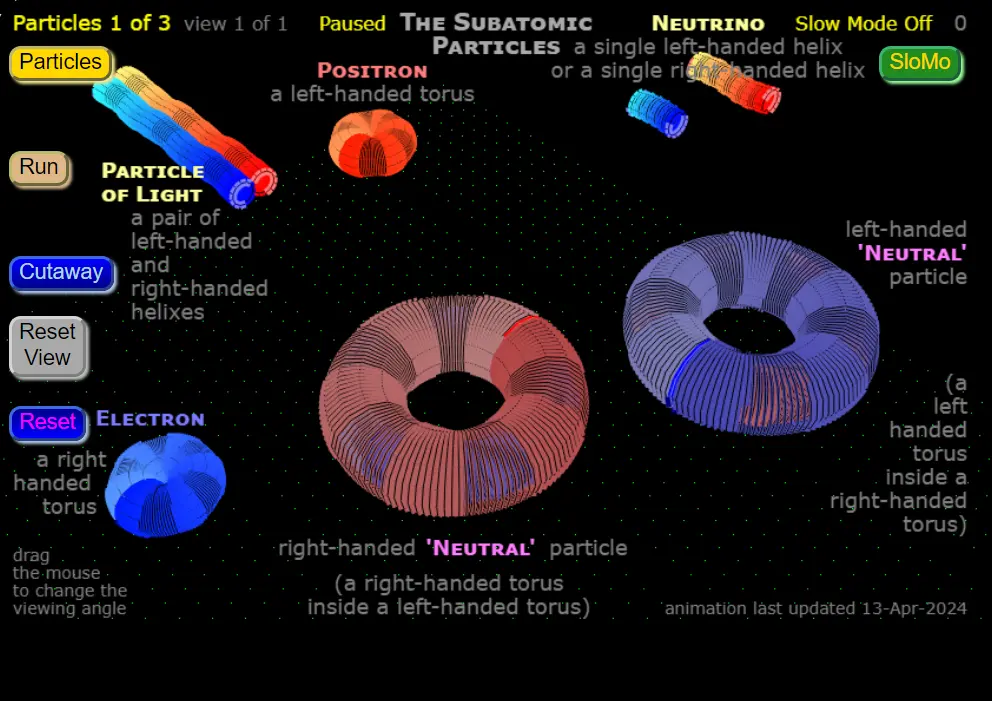
The neutrino, electron, positron, 'neutral' particle, proton, antiproton, neutron, antineutron, atomic nucleus, particle of light
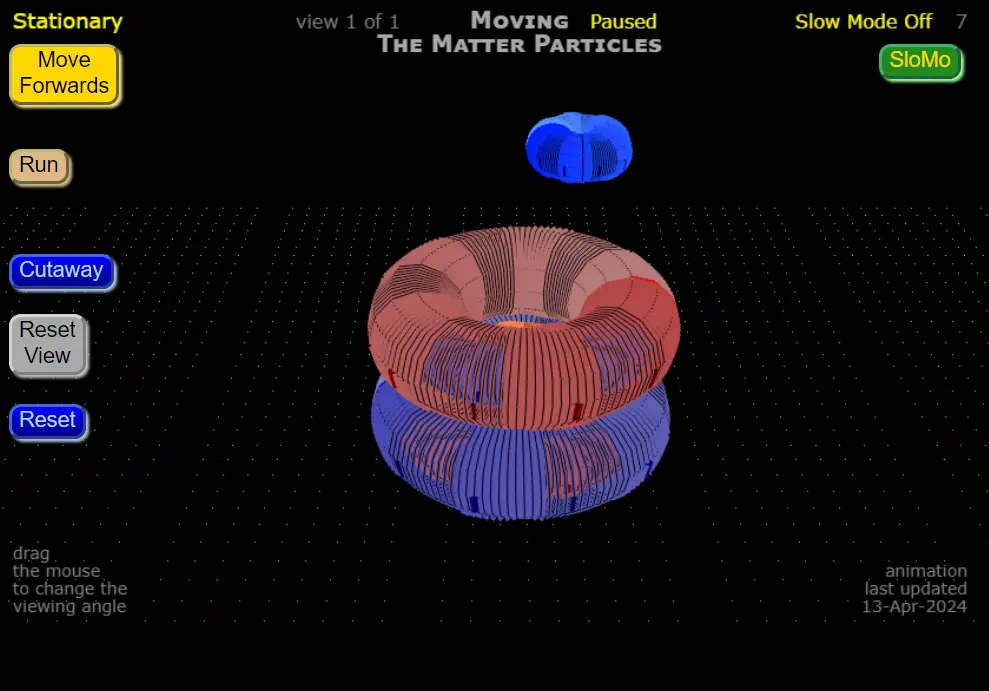
When matter particles move, they change shape
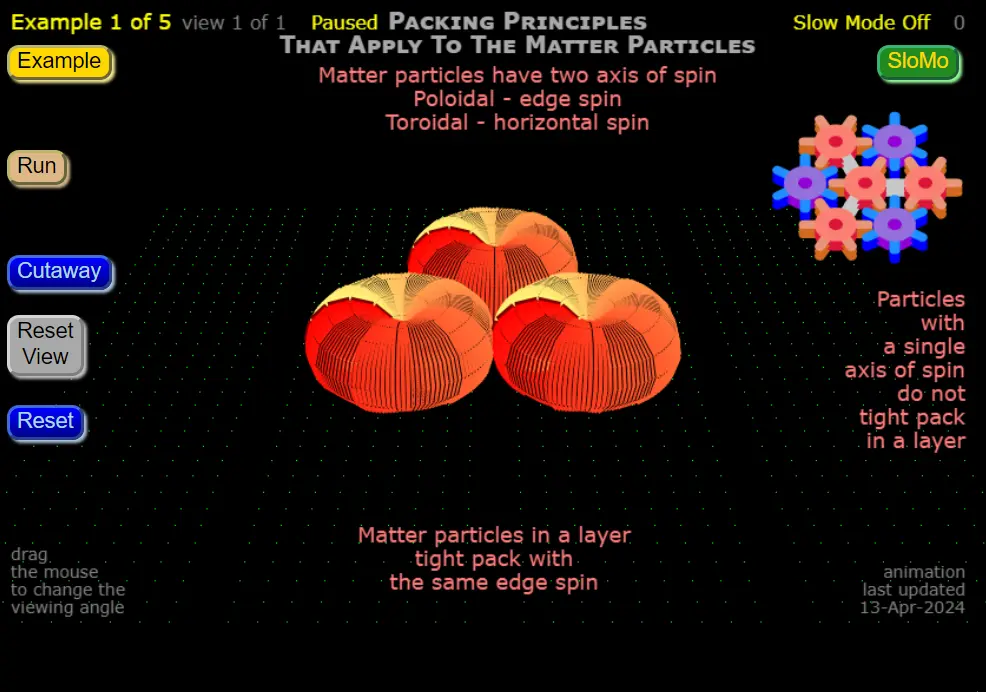
Proton and neutron packing principles
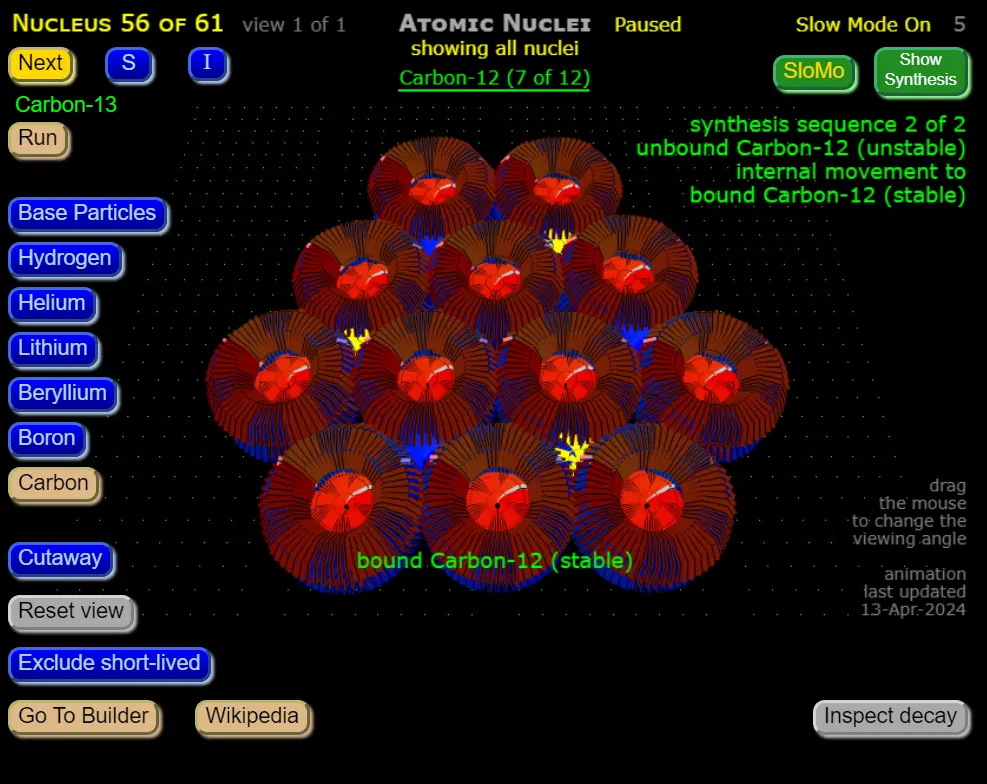
Isotopes of hydrogen through to carbon, including decay sequences
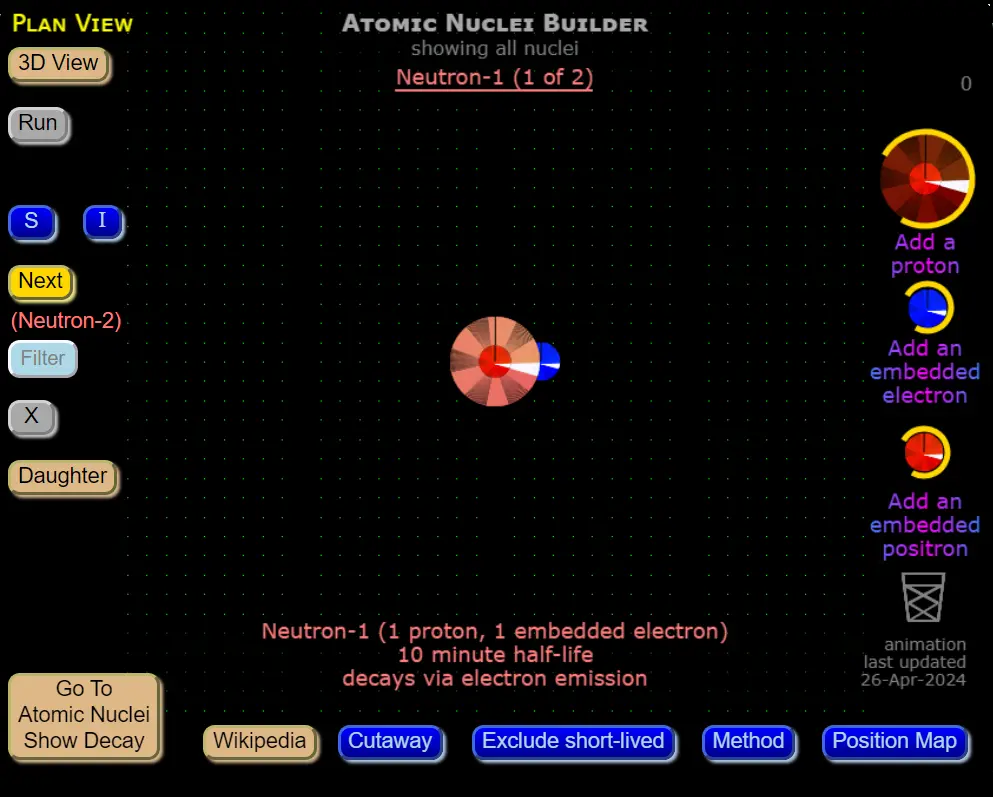
Includes preloaded configurations for isotopes from hydrogen through to iron
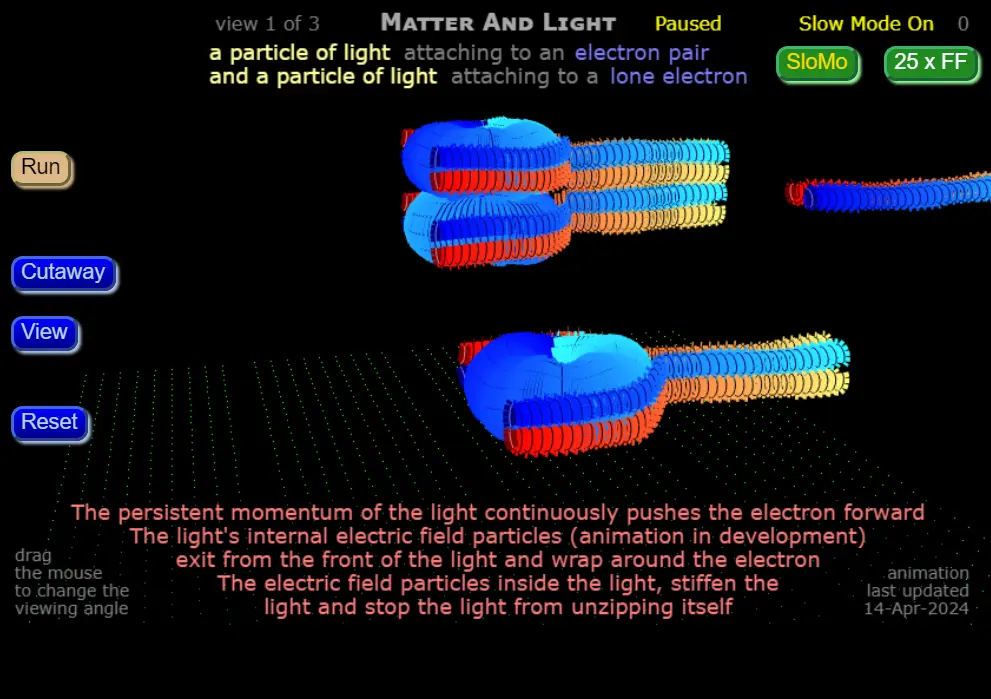
Inertia and momentum
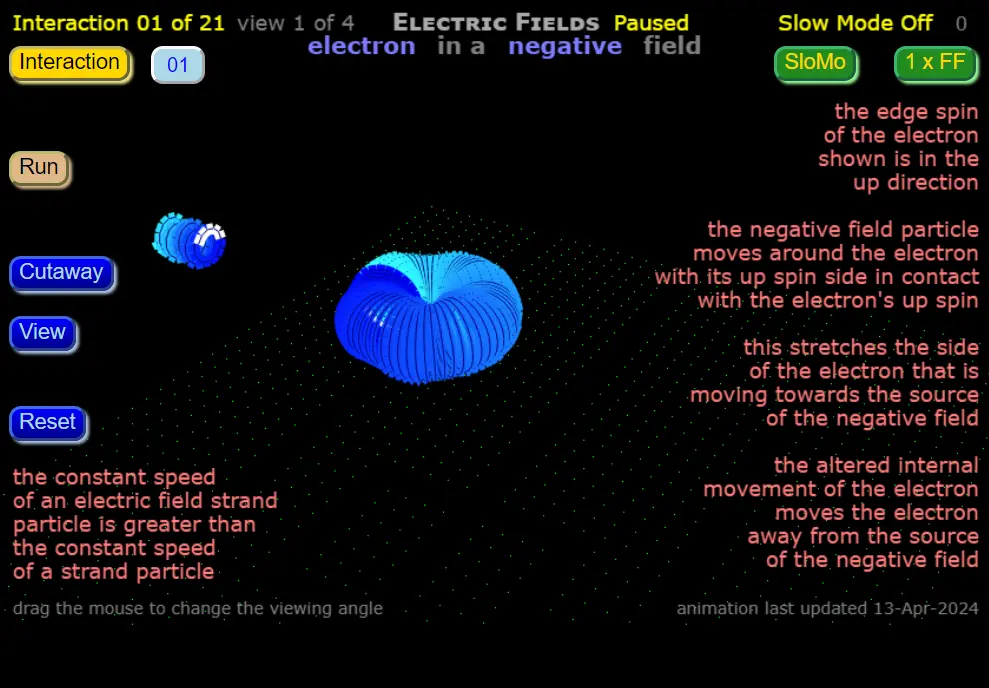
Left-handed and right-handed particles
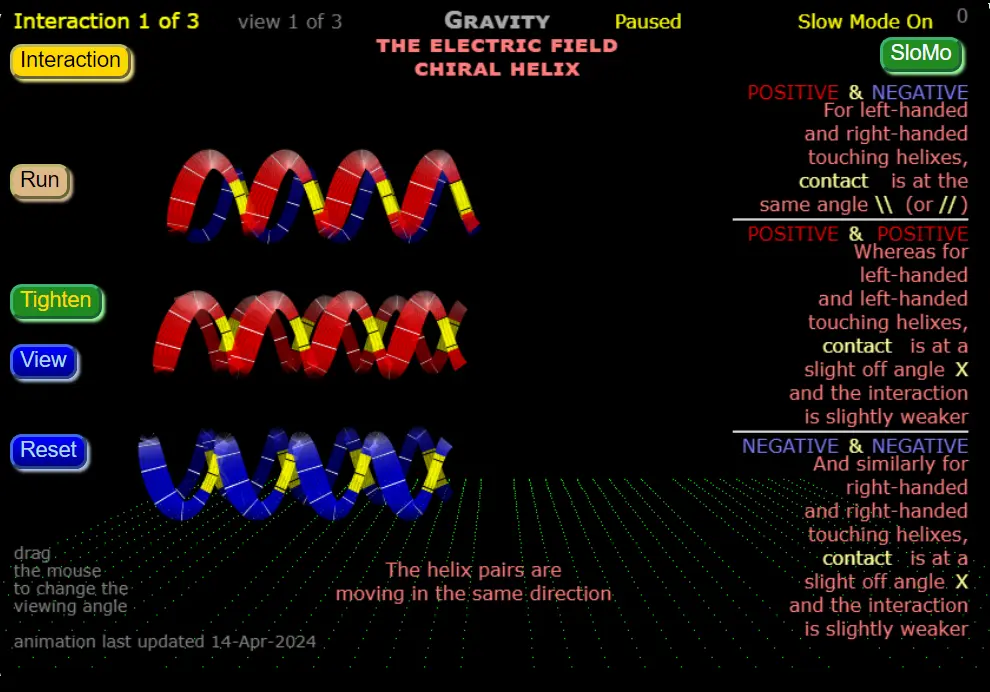
Chiral objects*
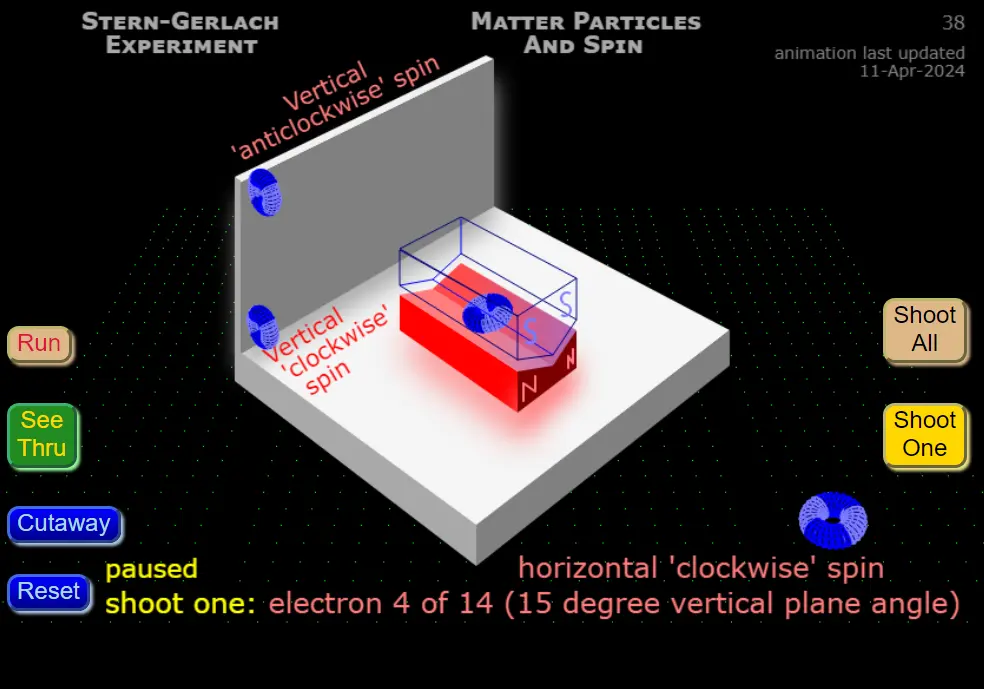
Matter particles and spin
Return to top of list
Index List
Physics Questions And Modern Physics Answers
Variation In The Reflection Of Light
Return to
top of the index list
Home Page Index
A physics model from first principles that is based on a mechanism for gravity
Background to the model
Contact details
Einstein and quantum mechanics
The model's discussions
Return to
top of the index list
Atom Walk Through Page Index
Discussions
Building the base subatomic particles
'Neutral' particle electric field particles
The model's subatomic particles
Return to
top of the index list
Atoms Page Index
Discussions
Atomic nuclei
Building the atomic nucleus
Creating positrons
Embedded nuclear electrons
Nuclear fission
Nuclear fusion
Neutron absorption
Radioactive decay
Exotic atoms
Antiprotonic helium
Antiprotonic hydrogen
Positronium
Macro electric fields
Electron in a macro electric field
Macro distances
Magnetic fields
Mechanism for the atom
Effect on an orbiting electron
Electron moving away from the nucleus
Electron moving towards the nucleus
Electrons are pushed along by an attached particle of light
Light in a 'neutral' particle electric field
'Neutral' particle electric field particles are long
'Neutral' particle electric fields are ineffective at right angles
Overall outcome
The atom is dominated by the 'neutral' particle electric fields
Net outcome
Light is directed around the nucleus
Tangential path
Understanding the atom
Quantum tunnelling
Electric fields have gaps
Recap of how the model works
Building the subatomic particles
Electric field particles
Giving particles of matter momentum
Inertia in the model
Momentum in the model
Movement in the model
'Neutral' particle electric field particles
The challenge
The challenge in modelling the atom
The remarkable thing about atoms
Return to
top of the index list
Double-Slit Experiment Page Index
Discussions
Building the subatomic particles
Modern physics discussion on diffraction
Question - does an electron go through both slits
Highlighted entries
Return to
top of the index list
Gravity Page Index
Discussions
Building the subatomic particles
Consequences of the model's gravity
Gravity and galaxy rotation curves
Gravity and mass and electric charge
Gravity and the matter particles
Matter particles in an electric field
Highlighted entries
Gravity in general relativity theory
Gravity in loop quantum theory
Return to
top of the index list
How The Model Works Page Index
Discussions
Electric charge and electric field particles
Concept of electric charge
Creation of the electric field particles
'Neutral' particle electric charge and electric field
Positive and negative electric fields
Electric charge attraction and repulsion
Attraction and repulsion examples
Electric field particles escape in pulses
Magnetic fields
Matter particles and electric field interactions
One interaction for everything
The concept of electric charge
Light and neutrinos in an electric field
Light and reflection
Light and refraction
Light and the double-slit experiment
Light and transparency
Light in an electric field
Light interacting with light
Neutrino in an electric field
Only near surfaces
Synchronised pulsating 'neutral' particle electric fields
Light creation and the speed of light
Emission of light
Matter and the speed of light
Mass, inertia and momentum
Giving particles of matter momentum
Inertia and momentum are different things
Inertia in the model
Momentum in the model
Movement in the model
Neutrinos do not interact with matter
Matter particle size
The electron and positron's size
The escaping electric field particles
The 'neutral' particle's size
The size of atoms
Particles and waves
Antiparticles
Building the subatomic particles
Mathematical form of this physics model
Philosophical question
The Standard Model
The types of subatomic particles
Wave-like behaviour
Special relativity discussions
Ability to measure the speed of light
Light clock
Special relativity calculations
Special relativity scenarios
Speed of light
Unstable particles
When atoms move
Start of the model
An expanding 3D universe
Atom and antiatom formation
Dark matter particle
Multiple universes
Particle and antiparticle
The elementary particle
The four base subatomic particles
Universal reference frame
A common explanation
An alternative approach
Conclusion
Direction of time
The travelling twin scenario
Return to
top of the index list
Mass Page Index
Discussions
Mechanism for mass
Building the subatomic particles
Giving particles of matter momentum
Inertia and momentum are different things
Inertia in the model
Momentum in the model
Movement in the model
Neutrinos do not interact with matter
Modern physics discussion on mass
Question about mass and the Higgs mechanism
The Higgs mechanism
Understanding E = mc2
Emission of light
Matter and the speed of light
The invariant mass of a moving particle of matter does not change
The Standard Model's understanding of E = mc2
This physics model's understanding of E = mc2
Return to
top of the index list
Modern Physics Discussions Page Index
Modern Physics Discussions Page
Discussions (YouTube videos)
A new way to think about gravity
Double-slit experiment at home
Quantum mechanics course of 10 lectures
Quantum mechanics course of 10 lectures
1 of 10 - Introduction to these lectures
2 of 10 - Linear operators and vector spaces
6 of 10 - Light polarization continued
7 of 10 - Circular polarization continued
8 of 10 - Evolution of states in phase space
9 of 10 - Black body radiation and history of quantum mechanics
10 of 10 - Harmonic oscillator and angular momentum
Return to
top of the index list
Notes Page Index
Discussions
A physics model from scratch
Our universe
Simple concepts
Electric charge and electric fields
Simple electric charge
Simple electric fields
Virtual particles of light
Electric interactions with matter particles
Moving a torus shaped particle
'Neutral' particle electric field particles are long
Simple attraction and repulsion
Mass, inertia and momentum
Higgs mechanism
Simple inertia
Simple momentum
Matter particle size
The escaping electric field particles
The electron and positron's size
The 'neutral' particle's size
Multiple body systems
A physics engine
Protons and neutrons
A simple proton and neutron
Quark particles
Simple atomic nuclei
The elementary particle
Freedom of movement
The shape of a particle
The four base subatomic particles
Simple neutrino, electron, positron, 'neutral' particle
The lowest level particles
Using the base subatomic particles to create a simple particle of light
Return to
top of the index list
Overview Page Index
Discussions
A mechanical model
Explaining how something works
Physics and mathematics
Approach
Modelling the subatomic particles as particles
Our universe
Goal
The atom is an essential part of our universe
The first attempt to model the atom
Method
Random processes find simple solutions
What the model builds
What the model starts with
Return to
top of the index list
Physics Questions And Modern Physics Answers Categories Index
Physics Questions And Modern Physics Answers Page
Question Categories
Of Interest
Are particles real
Electromagnetism and gravity
Elementary particle half-life
Equation for the Standard Model
How does light have momentum
How to derive physics
Neutron is a proton and electron
Publish a theory
Strong force and two protons
Tachyons do they exist
When an electron emits a photon
Why do electrons emit photons
Why does an electron move
Why is physics complex
Why is the proton stable
Classical physics
Bohr model of the atom
Classical physics insufficient (reply 1)
Classical physics insufficient (reply 2)
Electric charge
What is electric charge (reply 1)
What is electric charge (reply 2)
Electrons
Electron does not crash into nucleus
Electron in an atom (reply 1)
Electron in an atom (reply 2)
Electron not sucked into nucleus
Electron rotate 720 degrees
Is an electron a fundamental particle
What does half spin mean
Why are electrons in pairs
Why do electrons follow the exclusion principle
Gravity
How do we know that a graviton has spin 2
What is gravity
Why is gravity difficult to figure out
Why is there gravity
Mass
Could mass be removed from matter
Does the Higgs boson fit the Standard Model
Higgs boson and the Higgs field
Mass and the Higgs field
Why does matter have mass (reply 1)
Why does matter have mass (reply 2)
Quantum fields
Is quantum field theory proven
Particles popping out from vacuum
What are quantum fields
What is quantum field theory
Zero-point energy
Quantum mechanics
Bell's theorem
Double-slit experiment
How can a photon travel in every direction
Is quantum mechanics possibly wrong
Quantum entanglement communication
Wave-particle duality
Why does a photon reflect
Standard Model of particles
Is string theory real (reply 1)
Is string theory real (reply 2)
Is the Standard Model complete
How can a proton emit a positron
Neutrinos and photons
Quark types
What does a quark look like
Why do quarks violate the exclusion principle
Why does a particle have a spin
Universe
Quantum fields and the Big Bang
Why was the initial universe not a black hole
Return to
top of the index list
Physics Questions And Modern Physics Answers Of Interest Discussions Index
Physics Questions And Modern Physics Answers Of Interest Discussions
Of Interest Questions And Answers
3 - Equation for the Standard Model
6 - Neutron is a proton and electron
7 - Electromagnetism and gravity
8 - Strong force and two protons
9 - Why do electrons emit photons
10 - When an electron emits a photon
11 - How does light have momentum
12 - Elementary particle half-life
Return to
top of the index list
Physics Questions And Modern Physics Answers Classical Physics Discussions Index
Physics Questions And Modern Physics Answers Classical Physics Discussions
Classical Physics Questions And Answers
2 - Classical physics insufficient (reply 1)
3 - Classical physics insufficient (reply 2)
Return to
top of the index list
Physics Questions And Modern Physics Answers Electric Charge Discussions Index
Physics Questions And Modern Physics Answers Electric Charge Discussions
Electric Charge Questions And Answers
1 - What is electric charge (reply 1)
2 - What is electric charge (reply 2)
Return to
top of the index list
Physics Questions And Modern Physics Answers Electrons Discussions Index
Physics Questions And Modern Physics Answers Electrons Discussions
Electrons Questions And Answers
1 - Electron in an atom (reply 1)
2 - Electron in an atom (reply 2)
3 - Electron not sucked into nucleus
4 - Electron does not crash into nucleus
5 - Electron rotate 720 degrees
6 - Why are electrons in pairs
7 - Why do electrons follow the exclusion principle
8 - Is an electron a fundamental particle
Return to
top of the index list
Physics Questions And Modern Physics Answers Gravity Discussions Index
Physics Questions And Modern Physics Answers Gravity Discussions
Gravity Questions And Answers
2 - Why is gravity difficult to figure out
3 - How do we know that a graviton has spin 2
Return to
top of the index list
Physics Questions And Modern Physics Answers Mass Discussions Index
Physics Questions And Modern Physics Answers Mass Discussions
Mass Questions And Answers
1 - Why does matter have mass (reply 1)
2 - Why does matter have mass (reply 2)
3 - Could mass be removed from matter
5 - Does the Higgs boson fit the Standard Model
6 - Higgs boson and the Higgs field
Return to
top of the index list
Physics Questions And Modern Physics Answers Quantum Fields Discussions Index
Physics Questions And Modern Physics Answers Quantum Fields Discussions
Quantum Fields Questions And Answers
3 - Particles popping out from vacuum
4 - Is quantum field theory proven
5 - What is quantum field theory
Return to
top of the index list
Physics Questions And Modern Physics Answers Quantum Mechanics Discussions Index
Physics Questions And Modern Physics Answers Quantum Mechanics Discussions
Quantum Mechanics Questions And Answers
2 - Is quantum mechanics possibly wrong
4 - Quantum entanglement communication
7 - How can a photon travel in every direction
Return to
top of the index list
Physics Questions And Modern Physics Answers Standard Model Of Particles Discussions Index
Physics Questions And Modern Physics Answers Standard Model Of Particles Discussions
Standard Model Of Particles Questions And Answers
1 - Why do quarks violate the exclusion principle
3 - Is the Standard Model complete
4 - Is string theory real (reply 1)
5 - Is string theory real (reply 2)
6 - How can a proton emit a positron
8 - What does a quark look like
9 - Why does a particle have a spin
Return to
top of the index list
Physics Physics Questions And Modern Physics Answers Universe Discussions Index
Physics Questions And Modern Physics Answers Universe Discussions
Universe questions
1 - Why was the initial universe not a black hole
2 - Quantum fields and the big bang
Return to
top of the index list
Rationale Page Index
Discussions
Modelling the atom
Includes
To Understand The Hydrogen Atom - Is To Understand All Of Physics
Why Everything May Be Able To Be Modelled
Random processes
Includes
An Example Of A Complex Universe
An Example Of A Simple Universe
An Example Of A Solution Found By A Random Process
Highlighted entries
Return to
top of the index list
Stern-Gerlach Experiment Page Index
Discussions
Building the subatomic particles
Modern physics discussion on quantum spin
Highlighted entries
Return to
top of the index list
Variation In The Reflection Of Light Page Index
Variation In The Reflection Of Light Page
Discussions
Building the subatomic particles
Mechanism for the variation in reflection
Modern physics discussion on the variation in reflection
Highlighted entries
Return to
top of the index list